Gypsum is one of those minerals that quietly powers the Indian economy. From cement plants to farm fields, its presence spans nearly every major industry, yet most people have never stopped to think about where it actually comes from.
This article takes you inside India’s gypsum mines – where they are, how they operate, and why they matter more than you might expect.
Gypsum Reserves in India – The Big Picture
India is a major global player in gypsum production. According to the Indian Bureau of Mines (IBM), the country has vast total resources of 1,330 million tonnes, of which about 37 million tonnes are proven reserves ready for extraction.
In 2023, India produced an estimated 4.3 million tonnes of gypsum (USGS), highlighting its strong domestic supply.
Key Uses of Gypsum in India
- Cement Industry (Largest Consumer): Added to cement to delay the setting time of concrete.
- Agriculture: Used as a soil conditioner to treat saline and alkaline soils, thereby boosting crop yields.
- Construction: Used to manufacture Plaster of Paris (PoP), wallboards, and tiles.
- Fertilisers: Serve as raw materials for ammonium sulphate fertilisers.
Gypsum Mines in India – State-wise Distribution
1. Rajasthan
Rajasthan is the top Gypsum producing state of India. The state alone accounts for over 80% of India’s total gypsum resources.
According to Rajasthan’s Department of Mines & Geology, the geological reserves of gypsum in the state are approx. 1,055 million tonnes.
This ultimately also makes Rajasthan the nation’s top gypsum production house, accounting for more than 90% of the national production
The majority of the Gypsum deposits are concentrated in the western Thar Desert belt of the state primarily across these districts:
Bikaner – Home to the largest gypsum deposits, which include the famous Jamsar and Baller Gypsum Mine
Barmer – Significant surface deposits mined extensively by both public and private operators
Nagaur – Notable reserves including the large Bhadwasi deposit
Jaisalmer – Part of the Thar evaporite belt with active FAGMIL operations
Sri Ganganagar – Northern extension of the gypsum belt. The deposits of Rajasthan here occur in the gypsite form, which is an amorphous, earthy variety highly suited for cement and fertiliser industries.
2. Jammu and Kashmir
Jammu & Kashmir holds 14% of India’s total gypsum resources, roughly 150 million tonnes, as confirmed by the J&K Department of Geology and Mining.
The gypsum here is a high-purity evaporite mineral, occurring in clays and limestone formations across the rugged Himalayan terrain. Its purity ranges from 80% to 98%, making it highly suitable for the cement and steel industries.
Key producing areas include:
- Ramban – Largest deposit (~19 million tonnes)
- Assar – Estimated ~5 million tonnes
- Uri–Baramulla belt – A continuous 40 km gypsum stretch, a major supply for the Wuyan Cement Factory in Srinagar
However, mountainous terrain, poor road connectivity, and seasonal landslides limit extraction. Despite this, J&K’s high-grade deposits hold strong long-term potential, especially as India looks to reduce its dependence on gypsum imports.
3. Tamil Nadu
Tamil Nadu is the only southern state in India with considerable gypsum deposits and ranks third in production.
Interestingly, the state’s gypsum output is predominantly marine gypsum, which is recovered as a by-product from extensive salt pan operations along the coastline, particularly in the Thoothukudi (Tuticorin) region.
While Tamil Nadu does possess sedimentary gypsum deposits in inland districts such as Tiruchirappalli (Trichy), Virudhunagar, and Sivaganga, the bulk of commercial production comes from these coastal salt pans.
During the 2021-22 period, Tamil Nadu produced approximately 3.5 to 4 lakh tonnes of gypsum, contributing around 8% to 10% of India’s total output.
4. Gujarat
Similar to Tamil Nadu, Gujarat’s gypsum production is largely characterised by marine gypsum. Accounting for about 2% to 4% of the national output.
The state recovers this mineral as a secondary product from its massive sea salt manufacturing operations.
The vast salt pans along the state’s coastline, especially in the Kutch district and the Saurashtra region, hold significant marine gypsum deposits.
Gujarat’s annual gypsum production typically ranges between 1 and 2 lakh tonnes.
Although marine gypsum requires washing to remove salt impurities before use, it is extensively utilised by the state’s booming cement industry and local fertiliser companies as well
Sedimentary Gypsum Vs Marine Gypsum
Sedimentary Gypsum
- Sedimentary Gypsum is mined from solid rock formations (evaporite deposits) that formed millions of years ago by the evaporation of ancient seas or lakes.
- It is predominantly found in Rajasthan and Jammu and Kashmir
- It has a high purity of 80-90% Calcium sulfate
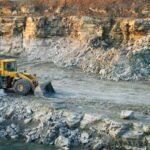
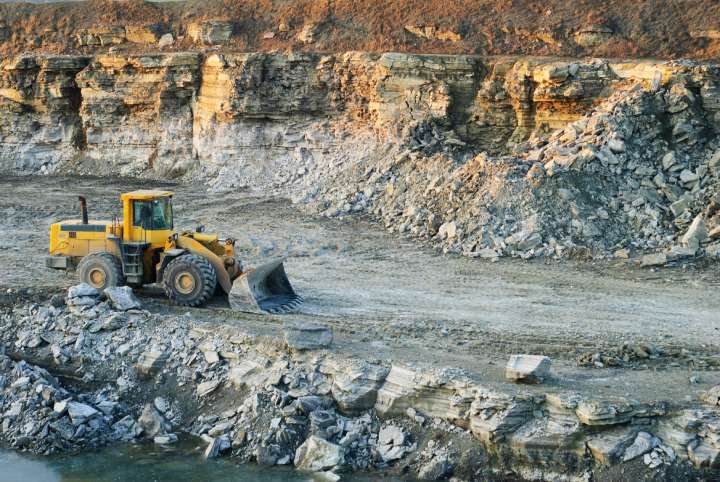
- Extracted mostly by open pit method
Marine Gypsum
- It is a secondary by product that is formed during solar evaporation of seawater to manufacture common salt
- Mostly found in Tamil Nadu and Gujarat
- It has low purity, high moisture content, and salt and chloride impurities, which require thorough washing before industrial use.
While this gypsum may not be of high commercial value or the backbone of Cement industries, it plays a major role in smaller local cement industries; at the same time, it is heavily used in agriculture to boost soil productivity